Breaks FM
Beats & Bass Culture — 1999
From pirate signal to global breakbeat soundtrack.
ON AIR — 1999 / 2008
From pirate signal to global breakbeat soundtrack.
Breaks FM started in the United Kingdom in the late 1990s, like so many other stations that put breakbeat on the airwaves without a licence or permission. An aerial, a transmitter, and a shared obsession with broken rhythms — that's how it first went on air.
It was born within the British pirate radio tradition, which for years was the only outlet for sounds the major networks largely ignored.
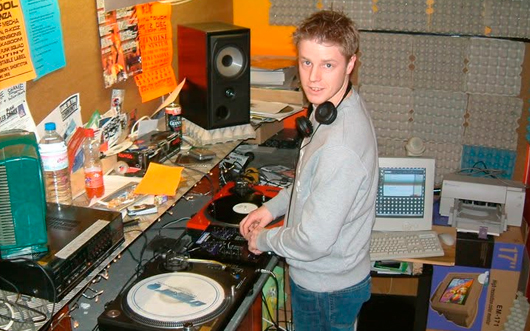
What began broadcasting in secrecy found its true voice in streaming. By moving online, Breaks FM stopped depending on an aerial and a postcode: anyone, anywhere, could tune in.
That decision changed everything. It turned a cult sound into a global phenomenon, and the station itself into the meeting point for underground breakbeat across half the world.
Nu skool breaks was never a purely British sound: it grew halfway between hip hop imported from the United States and the jungle of London's underground rooms. That dual root stayed alive in Breaks FM's programming.
The creative epicentre of nu skool breaks, heavy breaks, tear-out and breakstep, with clubs and labels that defined the sound the station carried to the rest of the world.
A scene of its own, sharper-edged, with its own pulse, that kept up a constant dialogue with the British one and fed the same dial with a different accent of the same genre.
Under the Breaks FM umbrella lived classic breakbeat, the nu skool breaks dominating London's clubs, bassline, heavy breakbeats, and the breakstep that was just starting to surface.
One same pulse, syncopated and broken, with a thousand different accents depending on who was behind the decks. The tear out strand — aggressive, distorted, low-end-heavy — was no dead end: it planted the seed of what would later become neuro funk and neuro break, carrying that same DNA of sonic brutality into the next decade.
All of it was, already, bass music culture. The obsession with sub frequencies, with the weight of the low end, with broken rhythm as a vehicle for tension — Breaks FM was not the antechamber to bass culture. It was bass culture, before the name even existed.
DJs and producers from all over the world passed through Breaks FM's schedule, each bringing their own accent to the same genre. Below is an A–Z list built from collective memory:
Breaks FM won the Breakspoll award for Best Radio Station five years in a row — the scene's own recognition of the station that represented it.
Launches in the UK as a pirate station, broadcasting breakbeat without a licence.
The station moves online, leaving the limits of FM signal behind.
Becomes a worldwide hub for breakbeat, with 5 consecutive Breakspoll wins.
The station pauses broadcasting, its original purpose already fulfilled.
This site was the home of the station. In 2007/08, Breaks FM — which was also a record label that released close to a dozen vinyl references — decided to pause its broadcast. It did so having fulfilled its purpose: giving a voice to underground music the mainstream largely ignored. By then, it already had — many times over.
After the pandemic, in 2021, Breaks FM saw a brief revival through a new online incarnation that kept the name alive for a couple of years — a reminder that some signals, once transmitted, never fully go silent.
Breaks FM remains a reference to this day. It was the great seed from which much of the breakbeat sound that now commands dancefloors around the world grew — with direct influence across every one of its branches. Whatever form the breaks takes today, its roots run through that dial. A part of electronic music history that deserves to be remembered and recognized.
A growing archive of sessions broadcast on Breaks FM, recovered and preserved on the Breaks FM YouTube channel. Click any title to watch.
This archive is a work in progress. More sessions will be added as they surface. If you have recordings from the original broadcasts, get in touch. Subscribe to Breaks.FM.channel on YouTube for the full growing archive.